
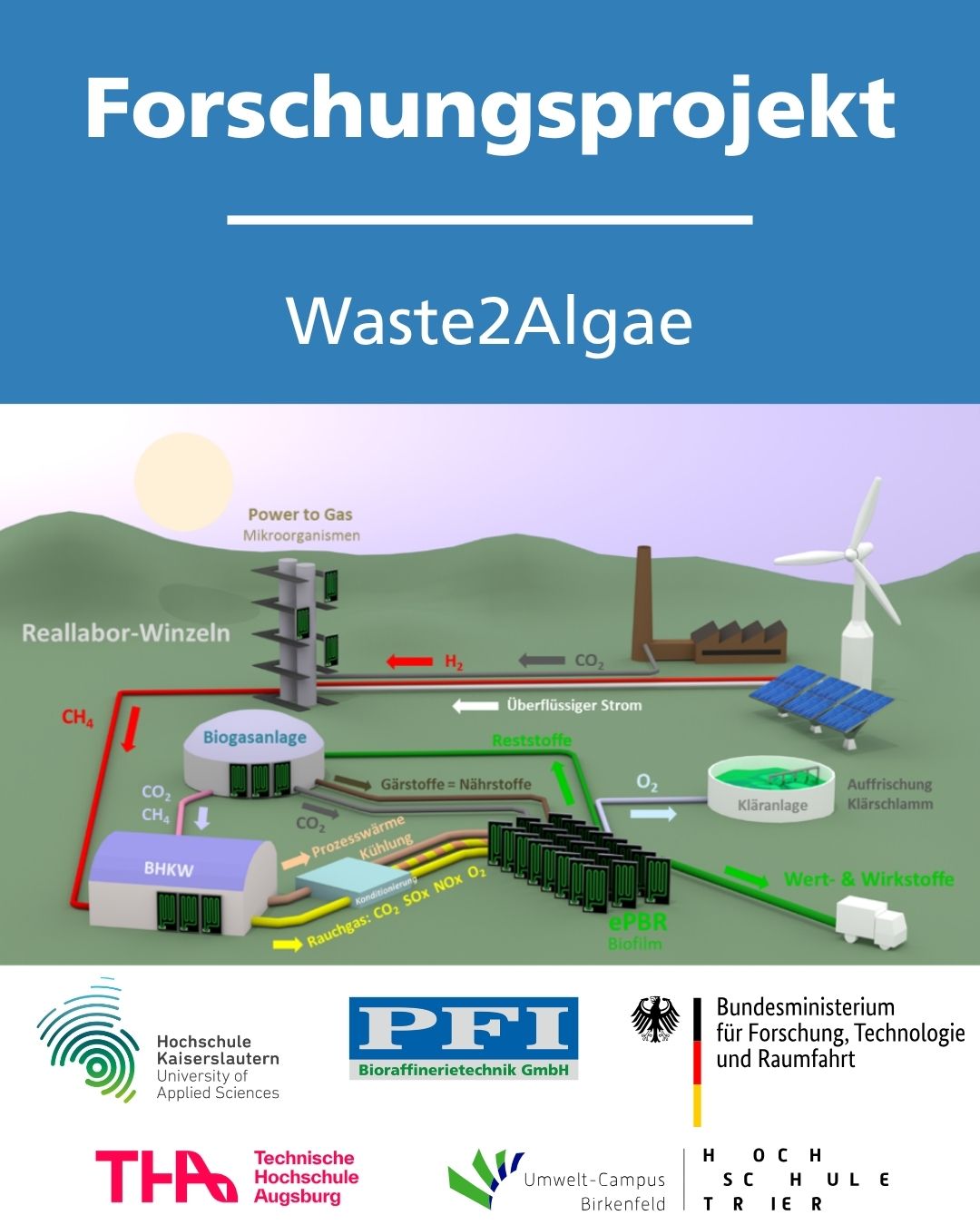
The Waste2Algae project is set to begin in 2027 and aims to convert CO₂, flue gases and biogenic waste materials into valuable raw materials using microalgae and cyanobacteria.
Blue-green algae, as cyanobacteria are also known, are only familiar to most people when, in summer, high water temperatures and a lack of oxygen cause inland waters to ‘tip over’, leading to bathing bans and fish deaths. The BMFTR collaborative project ‘Waste2Algae’ is developing a sustainable plant technology for the production of valuable materials from flue gases and biogenic waste using microalgae. On a prototype scale, the use of novel photobioreactors and extremophilic cyanobacteria in a cascade system is being tested to utilise CO₂ from industrial processes (Carbon Capture & Utilisation, CCU) and convert it into high-value products.
The target products are substances induced or produced by high CO₂ concentrations, such as bioplastics (e.g. polyhydroxyalkanoates (PHA), in particular polyhydroxybutyrate (PHB)), active ingredients and value-added materials (e.g. bioactive substances, pigments, polysaccharides), as well as the residual biomass remaining after extraction (e.g. for use as animal feed, fertiliser or in biogas plants). Waste heat can be used to maintain a constant temperature in the fermentation processes throughout the year, as well as for drying and reactor sterilisation.
The plant is being constructed at the Pirmasens-Winzeln Energy Park field lab by connecting the reactor facility to an existing biogas combined heat and power plant. Flue gas, waste heat and digestate are being integrated into the process development through the use of artificial intelligence in the process control system, with the aim of optimising and closing the entire process chain in line with the ‘waste-to-value’ principle.
A central technical approach is the combination of extremophilic terrestrial cyanobacteria in the form of immobilised biofilms and novel photobioreactors, which can be used to overcome the major innovative barriers to algae- and microorganism-based production of value-added products and active substances arising from low concentrations of biomass and target products.
Research and development needs in this area relate primarily to the upstream integration of the new process technology into cascade use, its integration with biomass conversion plants, and the screening for new, effective microbial production strains (including those in the algae strain collection at the University of Kaiserslautern, which contains over 400 potential strains).
The project consortium comprises the Kaiserslautern University of Applied Sciences (consortium coordinator), PFI-Bioraffinerietechnik GmbH, the Technical University of Applied Sciences Augsburg, Weselberger Metallbau GmbH, the Birkenfeld Environmental Campus of Trier University of Applied Sciences and the Pirmasens Testing and Research Institute. The scientific and technical foundations for achieving the project’s objectives are being developed across 12 work packages.
Whilst the research institutions – the universities of Kaiserslautern, Trier and Augsburg, and PFI – are investigating the scientific principles underpinning the optimisation of biotechnological processes, the companies PFI-Bioraffinerietechnik GmbH, Weselberger Metallbau GmbH and Inline Process Solutions GmbH aim to implement this process as a pilot plant at the established research biogas plant in Winzeln (Pirmasens). Enquiries from end customers regarding the practical implementation of the technology have already been received.
The project will commence on 1 January 2027 and will run for 27 months. The project costs amount to approximately €1.6 million. The project is funded by the Federal Ministry of Research, Technology and Space (BMFTR).
Do you have any questions about the project? Please get in touch!
Your Contact Person:

Benjamin Pacan
Research Facilities
Sign up for our newsletter to stay up to date.
Did you enjoy our blog article? Then sign up for our newsletter today! Published quarterly, it provides exciting insights into all things PFI. Stay informed about the latest topics in research, development, and testing—always up to date!
