
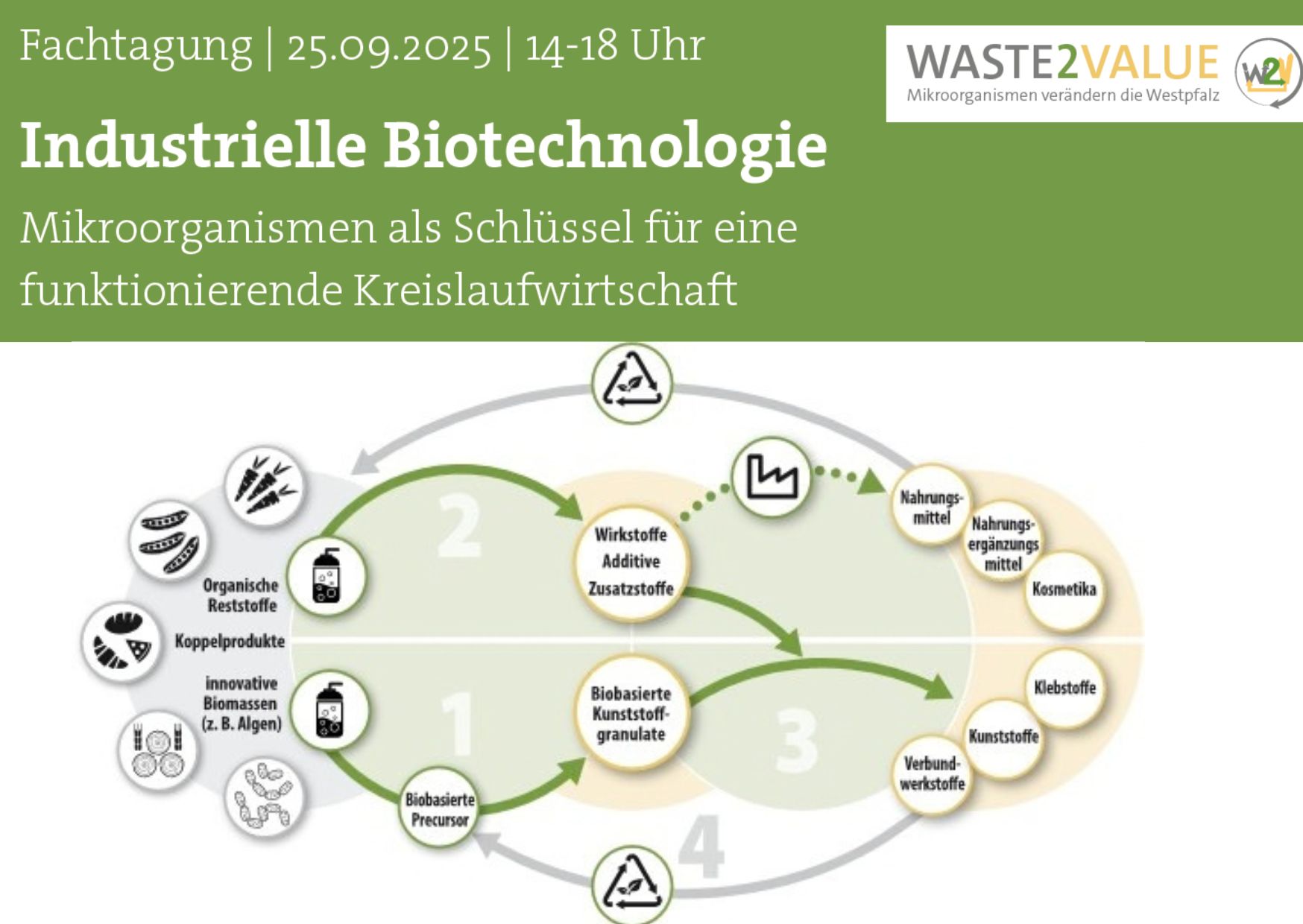
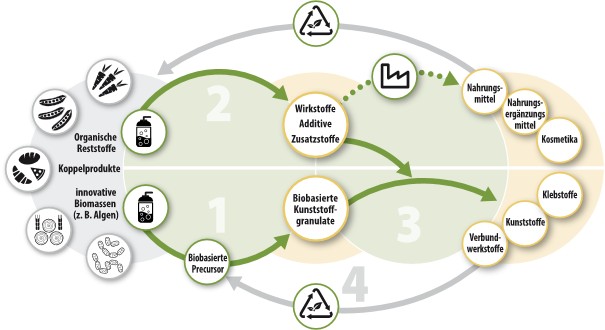
How can waste materials be turned into new raw materials? What role do microorganisms and fermentation processes play in the development of sustainable value chains?
These issues were the focus of the third Industrial Biotechnology Symposium, held on 24 September 2026 at the Pirmasens campus of Kaiserslautern University of Applied Sciences. The event centred on the regional Waste2Value (W2V) Innovation Alliance, which, through various research projects, demonstrates how microorganisms can help address current challenges in the circular economy. Representatives from the worlds of research, business and politics used the event to discuss the latest research findings, practical examples and future prospects for industrial biotechnology.
The Waste2Value consortium combines the traditional expertise of the Western Palatinate with modern industrial biotechnology. The aim is to use organic waste as a starting point for new raw materials, platform chemicals and bio-based materials, and to keep valuable materials within the circular economy as far as possible.
Exchange between the research community and industry
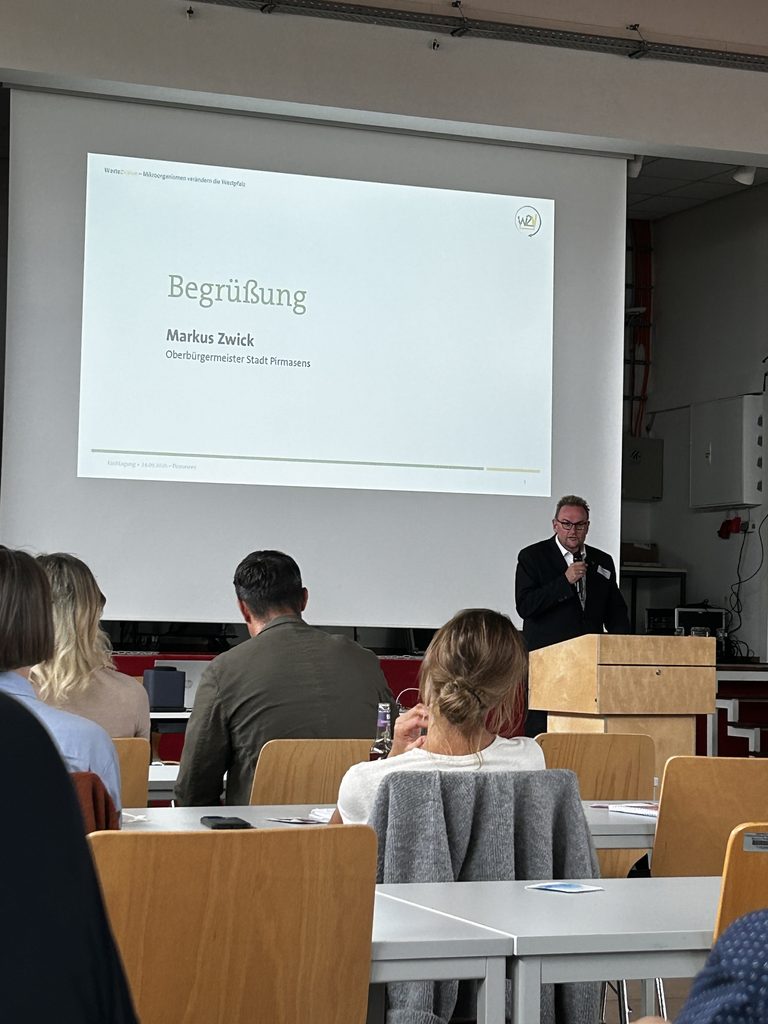
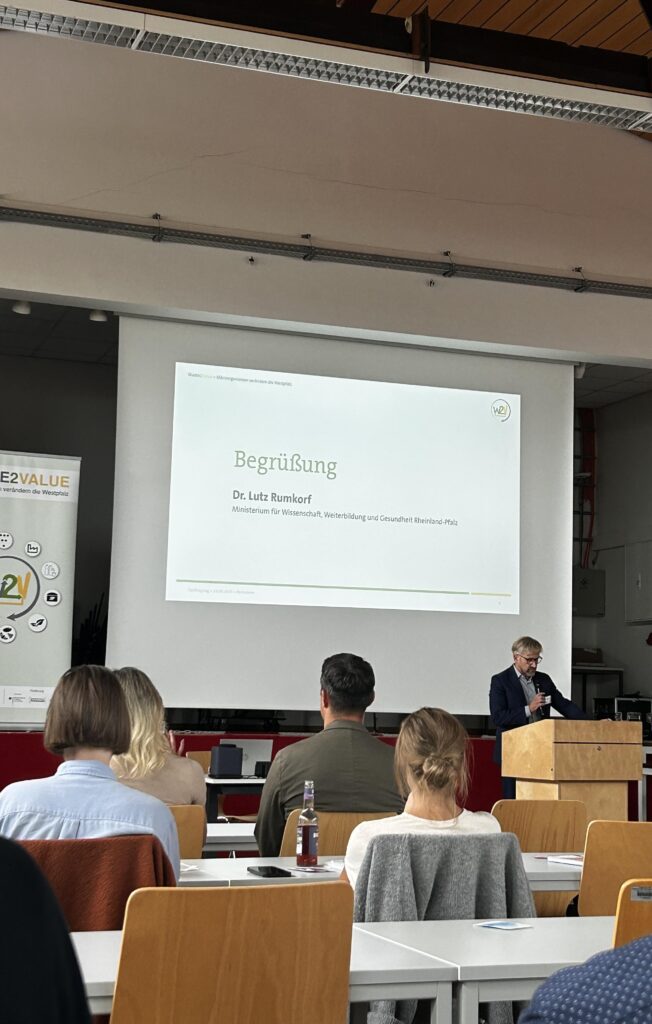
At the start of the event, Markus Zwick, Lord Mayor of Pirmasens, and Dr Lutz Rumkorff from the Rhineland-Palatinate Ministry of Science and Health emphasised the importance of Kaiserslautern University of Applied Sciences and the Waste2Value alliance for Pirmasens as a centre for business, science and innovation. Both highlighted the contribution made by the alliance’s research work to the development of sustainable technologies and to regional value creation.
Two practical examples then provided insights into the industrial application of biotechnological processes. Dr Barbara Navé from BASF SE explained the challenges involved in integrating biotechnological approaches into existing industrial production processes. She sees great potential for biotechnological solutions, particularly in the field of specialised and high-value products.
Jörg Ullmann from Algenfarm Klötze GmbH highlighted the wide range of potential uses for algae as a sustainable source of raw materials. Numerous applications are already possible today, particularly in the food sector. However, further scaling-up and economically viable production conditions are necessary for wider industrial use.
In addition, further research projects in the fields of fermentation, algal biotechnology, recycling and bio-based materials were presented. The event highlighted that industrial biotechnology can be a key component of the future circular economy. The intelligent use of residual materials not only helps to prevent waste, but also creates new value chains and sustainable prospects for businesses.
PFI as a key research partner in the Waste2Value alliance
As one of the key research partners in the Waste2Value project, the Testing and Research Institute Pirmasens (PFI) is particularly active in the field of industrial fermentation processes. The aim is to develop biological processes that can convert waste materials into valuable chemical feedstocks, thereby enabling new industrial applications. During the symposium, the PFI presented the current status of two research projects, that are pursuing different approaches to the utilisation of biogenic waste materials.
FermBioPol: Producing platform chemicals from waste materials
Jochen Sema from the Biotechnology Department presented the research project FermBioPol. The aim of the project is to utilise starchy waste materials from the food industry to produce platform chemicals. These chemical building blocks form the basis for the subsequent production of bio-based polymers and other sustainable materials. In the project, waste materials from bakery and food production are first processed and then converted into valuable intermediate products using microbial fermentation processes. The PFI is focusing primarily on the development and optimisation of fermentation technology, as well as on scaling up the processes from the laboratory to an technical scale.
“Our aim is to further develop fermentation processes so that high-quality platform chemicals can be produced from waste materials. In doing so, we are laying the foundations for bio-based materials and a more resource-efficient industry,” said Jochen Sema.
The research highlights the potential of waste streams that have been little utilised to date and shows how biotechnological processes can contribute to reducing reliance on fossil feedstocks.
InnoFerm: New approaches for heterogeneous waste materials
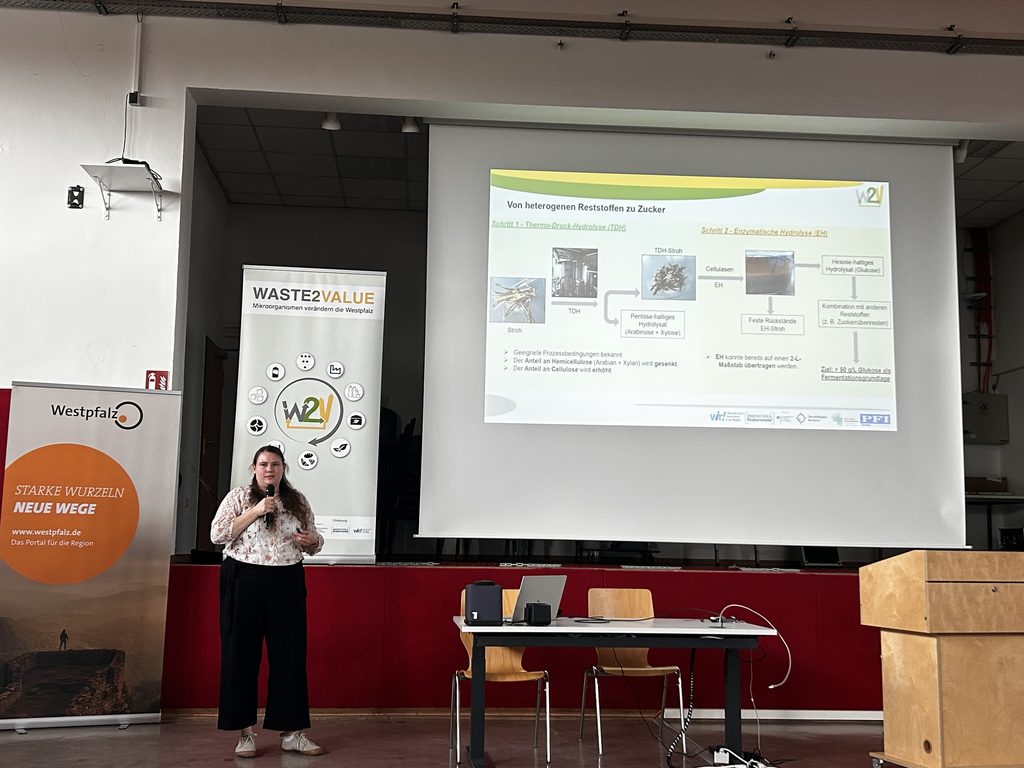
Einen weiteren Schwerpunkt bildete die Vorstellung des neu gestarteten Projekts InnoFerm durch Sarah Gliemann. Das Vorhaben baut auf den Erkenntnissen vorheriger Waste2Value-Projekte auf und erweitert den Fokus auf komplexe und heterogene Reststoffströme aus Landwirtschaft und Lebensmittelproduktion. Ziel ist die Entwicklung und Demonstration innovativer biotechnologischer Verfahren, mit denen sich unterschiedliche Biomasse-Reststoffe für die Herstellung biobasierter Chemikalien und Polymere nutzen lassen. Neben der Fermentation stehen dabei auch moderne Aufbereitungs- und Recyclingverfahren im Fokus. Gemeinsam mit verschiedenen Industriepartnern arbeitet das PFI an der Weiterentwicklung und Demonstration dieser Technologien.
“A functioning circular economy requires innovative processes that also incorporate residual materials which have previously been difficult to utilise. This is precisely where InnoFerm comes in, laying the foundations for new, sustainable value chains,” emphasises Sarah Gliemann.
Research for the bioeconomy of tomorrow
For the PFI, the development of Waste2Value confirms the great potential of biotechnological processes for an industry that conserves resources. The previous work from projects such as FermBioPol and InnoFerm are helping to translate innovative technologies from the laboratory into practical application and to open up new avenues for the sustainable use of waste materials.
Sign up for our newsletter to stay up to date.
Did you enjoy our blog article? Then sign up for our newsletter today! Published quarterly, it provides exciting insights into all things PFI. Stay informed about the latest topics in research, development, and testing—always up to date!
