
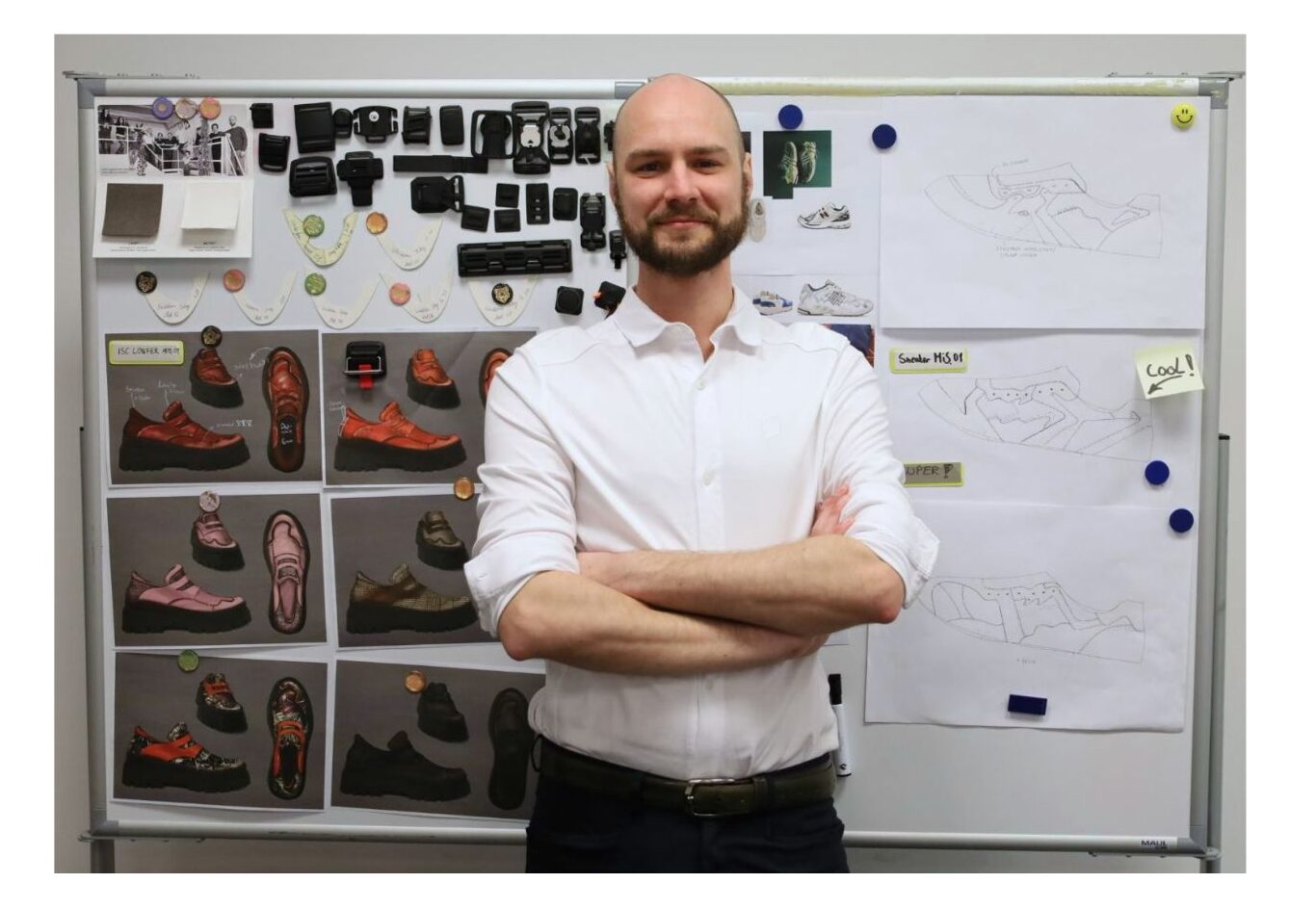
When people talk about 3D printing, many initially think of the production of individual components or prototypes. But the technology is capable of much more: modern additive manufacturing processes make it possible to print directly onto textiles, leather and other materials used in the footwear industry. This opens up new possibilities for design, functionality and production processes.
More than just a printing process
In direct 3D printing on materials, designs, patterns or relief structures are built up layer by layer. Unlike traditional 2D printing processes, this creates structures that can be both seen and felt, giving the product a completely new visual and tactile effect. This enables, for example
- decorative trims
- customised surface textures
- functional elements
- lacing components or reinforcements
can be applied directly to the material.
This opens up new opportunities, particularly for the footwear industry, to design products that are more personalised and innovative.
Challenge: High costs of established systems
PolyJet 3D printers are now frequently used for high-end applications. Whilst these deliver excellent print results, they involve high capital and running costs. In addition, there are often mandatory maintenance contracts and ongoing software costs. For many small and medium-sized enterprises, these factors present a significant hurdle – particularly in the early stages of development, when new ideas and designs need to be tested first.
Our approach: Affordable technology for innovation
At PFI, we are therefore aiming to achieve comparable results using significantly more cost-effective FDM (Fused Deposition Modelling) printing systems. In doing so, we are deliberately focusing on:
- affordable hardware
- open-source software
- flexible development environments
- independent process design
The use of open-source solutions makes it possible to avoid licence and subscription fees whilst remaining independent of individual software providers. This aspect is becoming increasingly important, particularly at a time of rising costs and growing dependence on proprietary systems.
Improving production efficiency
Our development work focuses on the direct printing of textiles and leather. The aim is to apply three-dimensional structures directly to materials ready for processing. For example, this allows that
- patterns and design elements
- functional reinforcements
- fastening and lacing systems
- customised appliqués
be produced in a single manufacturing step. This not only opens up new design possibilities; it also means that individual production steps can be omitted, such as the fixing of components or certain preparatory work in the cutting area.
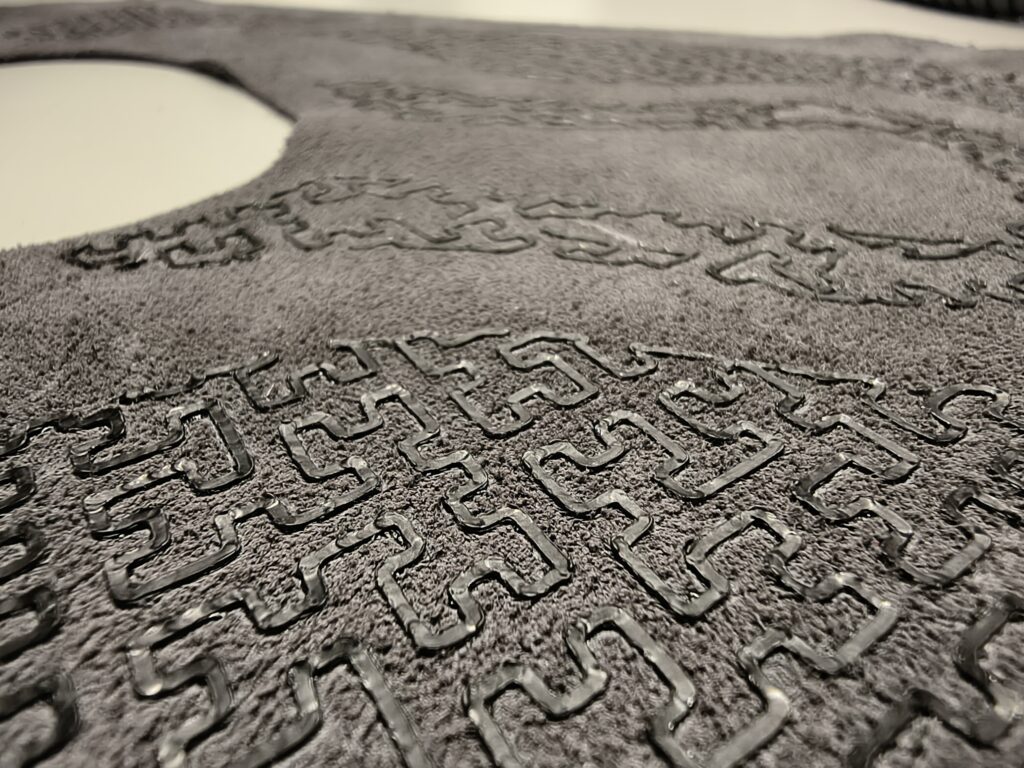
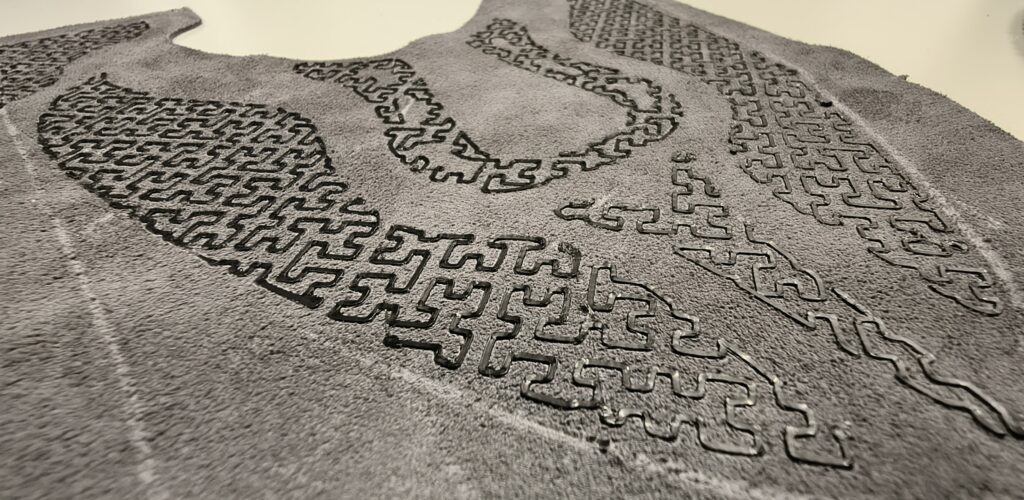
Direct printing on textiles and leather
Ein besonderes Potenzial liegt in der Zusammenführung mehrerer Arbeitsschritte. Während klassische Fertigungsprozesse häufig aus zahlreichen Einzeloperationen bestehen, kann der Direktdruck verschiedene Funktionen in einem einzigen Maschinenlauf integrieren. Das spart Zeit, reduziert den Materialeinsatz und eröffnet neue Möglichkeiten für eine effizientere Produktion. Insbesondere für die wenigen verbliebenen Schuhhersteller in Deutschland kann dies ein wichtiger Baustein sein, um Entwicklungs- und Produktionskosten zu senken und gleichzeitig innovative Produkte auf den Markt zu bringen.
Initial results are promising
Our work is currently still at an early stage of development. However, the first test applications have already been successfully implemented and demonstrate the potential of the method. In addition to developing robust, high-quality printing processes, we are currently systematically compiling data on:
- suitable material combinations
- printing parameters
- adhesion properties
- areas of application
The aim is to provide future users with a sound foundation for the practical application of the technology.
Shaping the future together
Direct 3D printing onto textiles and leather combines design freedom, functionality and efficiency in an innovative way. The technology offers great potential for the development of new products and production concepts in the footwear industry.
Would you like to find out more about our research or discuss your own ideas? If so, we look forward to discussing these with you at the PFI’s International Shoe Competence Centre (ISC).
Get in touch with us – and help shape the future of footwear development together with us.
Your Contact Person:

Liselotte Vijselaar
ISC – International Shoe Competence Center
Sign up for our newsletter to stay up to date.
Did you enjoy our blog article? Then sign up for our newsletter today! Published quarterly, it provides exciting insights into all things PFI. Stay informed about the latest topics in research, development, and testing—always up to date!
