
Development of adaptive, smart shoes incorporating shape-memory polymers integrated into the textile fabric for heat and moisture regulation

Project Information
Duration:
1 January 2026 to 31 December 2027
Project Sponsors:
- Federal Ministry for Economic Affairs and Energy
- Industrial Collective Research
- German Aerospace Center
Project Partners:
- Dresden University of Technology




Initial situation & project description
There has long been a demand for shoes that are both functional and comfortable. A shoe is considered breathable if moisture and sweat are wicked away from the foot and air from outside can enter the shoe. The aim of the project is to develop adaptive, smart shoes incorporating shape-memory polymers integrated into the textile fabric for heat and moisture regulation.
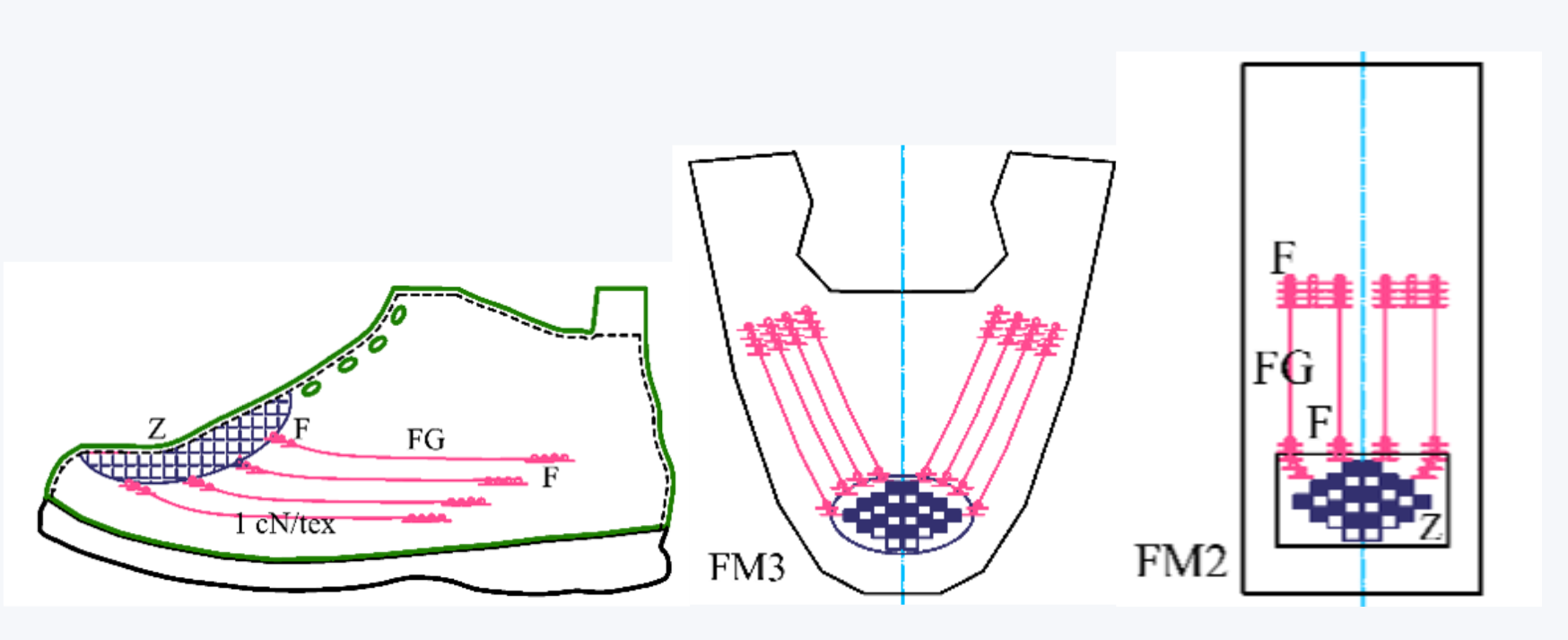
A temperature between 27°C and 36°C inside the shoe is considered comfortable. Leather shoes have a high moisture-holding capacity but limited moisture permeability. Shoes with membrane structures support ventilation within the shoe via passive pumping effects, but act as an additional barrier to moisture transport. This leads to discomfort and can adversely affect skin health. A promising approach involves adaptive footwear designed to enhance comfort. Self-opening pores offer a solution to changes in climatic parameters without the need for external actuators or sensors, thereby enabling rapid heat exchange and air circulation in real time. Such active systems can interact with the environment, thereby regulating the microclimate inside the shoe in a targeted and rapid manner. Shape-memory polymers (SMPs) are particularly suitable as they react to an external stimulus (e.g. temperature) and can change their shape. The targeted integration of SMP yarns into knitted fabrics aims to create shoe designs that open pores when the temperature rises, thereby facilitating heat and moisture exchange. Demonstrating how the technology works, analysing the identified principles and providing practical guidance for SMEs will facilitate further transfer to industry. There is a growing demand in the market for smart designs, particularly in medical and sporting applications and smart wearables. This presents significant growth potential for SMEs in the German footwear sector and related industries (textiles, leather, plastics) to establish themselves with innovative solutions.
Any questions about the project?
Your Contact Person:

Martin Wagner
Research and Engineering
Sign up for our newsletter to stay up to date.
Did you enjoy our blog article? Then sign up for our newsletter today! Published quarterly, it provides exciting insights into all things PFI. Stay informed about the latest topics in research, development, and testing—always up to date!
